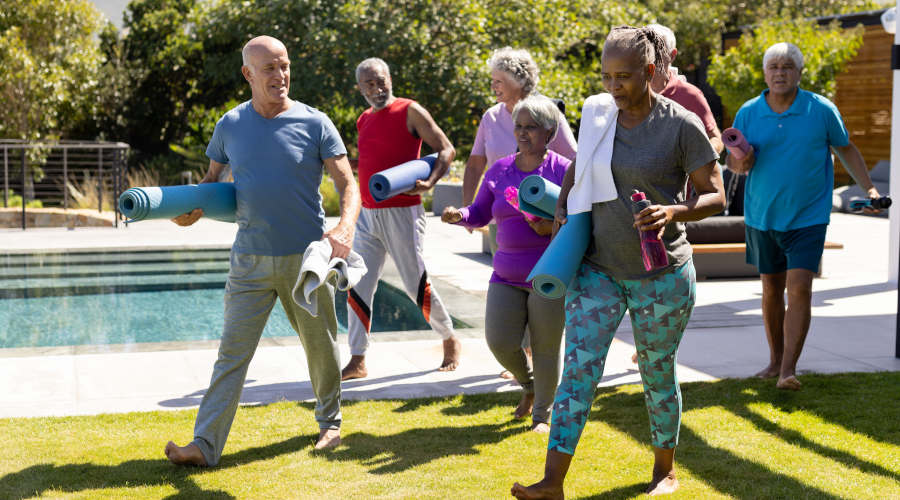
Living in a senior living community does not mean giving up physical activity. With appropriate movements and daily opportunities to stay active, older adults can help maintain their strength, balance, and mobility.
Moving into a senior living community often changes daily routines. Tasks that once filled part of the day, such as maintaining the home or taking out the trash, may now be handled by staff. While this change can make life more comfortable, it can also reduce opportunities for physical activity without residents even realizing it.
Staying active does not require intense workouts. A walk, a few exercises in the apartment, or participating in a group activity can easily become part of a daily routine. The key is to choose movements that match the person's abilities and to practice them regularly.
Common areas often provide simple opportunities to stay active. A resident might walk to the dining room, take a longer route through the hallway, or walk to an activity instead of spending long periods sitting in their apartment. Depending on the layout and weather, gardens and outdoor walking paths can also provide pleasant places to walk. These movements may seem modest, but they can help maintain the habit of staying active.
For someone who finds walking difficult, the distance can be short at first and gradually increase over time. Taking breaks on a bench or in a common area can make it easier to remain active at a comfortable pace.
Some senior living communities offer exercise classes, gentle dance programs, or other physical activities. Participating in these activities can help residents maintain a routine while also providing opportunities to socialize. Before joining a program, it can be helpful to determine whether the activity is appropriate for the person's physical condition and whether modifications are available.
Muscle strength plays an important role in many everyday activities, including getting up from a chair, carrying a bag, opening a door, or climbing a few stairs. Strength therefore deserves attention even for someone who walks regularly. General physical activity guidelines for older adults recommend including muscle-strengthening activities at least two days per week.
There are many ways to work the muscles in a small space. Standing up from a chair and slowly sitting back down, exercising with a resistance band, or lifting light weights are examples that can be adapted to individual abilities. The choice of exercises should take into account factors such as mobility, balance, and existing health conditions.
Someone who is not accustomed to exercising can start gradually. Movements should remain controlled and should not cause unusual pain. A qualified exercise professional or physical therapist can demonstrate proper techniques and recommend an appropriate progression, particularly after a fall, hospitalization, or extended period of inactivity.
Staying fit is not only about walking farther or becoming stronger. Balance also plays an important role when moving around an apartment, turning in a hallway, or stepping over a doorway threshold. Physical activity recommendations for older adults generally encourage activities that help develop both balance and strength.
Some balance exercises can be performed near a sturdy counter or with the guidance of a qualified professional. However, someone who feels unsteady should not attempt movements alone if there is a risk of falling. The goal is to gradually improve balance and confidence in a safe environment.
Group activities can be especially useful when they offer different levels of difficulty. This allows each resident to participate according to their abilities. Someone who uses a mobility aid or becomes tired quickly may also benefit from movements adapted to their individual situation.
Meals, recreational activities, television, and visits can result in a significant portion of the day being spent sitting. Without turning every period of rest into an exercise session, residents can look for simple ways to regularly interrupt long periods of inactivity. Getting up to get a glass of water, walking for a few minutes after a meal, or visiting a neighbor are small opportunities to move throughout the day.
Establishing a routine can make consistency easier. A resident might connect a short walk with breakfast, a favorite television program, or an activity scheduled by the community. These familiar cues can make physical activity feel like a natural part of the day rather than something that must be planned from scratch each time.
It is also important to respect days when energy levels are lower. A shorter period of activity may be more appropriate than completely abandoning the routine. If fatigue becomes unusual, worsens, or occurs along with other symptoms, a healthcare professional can help determine the possible cause.
Enjoyment can make a meaningful difference when it comes to maintaining healthy habits. Some people enjoy walking alone at their own pace, while others prefer music, group exercise, dancing, or spending time outdoors. There is no single right way to stay active in a senior living community.
Family members and friends can also play a supportive role. A visit can be an opportunity to take a walk together or encourage participation in an activity the resident enjoys. This support should always respect the person's preferences and abilities rather than turning every visit into an obligation to exercise.
Living in a senior living community can provide a supportive environment for physical activity when opportunities for movement are incorporated into everyday life. By combining regular walking and movement with appropriate strength and balance exercises, older adults can help maintain their mobility, independence, and ability to continue enjoying the activities that matter to them.